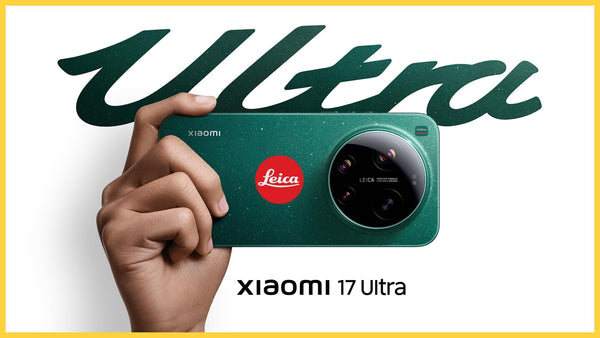
The boundary between high-end photography gear and mobile communication has finally dissolved. With the release of the Xiaomi 17 Ultra, the tech world is witnessing a device that prioritizes optical physics as much as computational power. At BIKMAN TECH, we know that discerning users look past the marketing hype to understand the engineering beneath the glass. This flagship isn't just a smartphone; it is a statement on the future of mobile imaging, boasting a groundbreaking 1-inch sensor, a massive Silicon-Carbon battery, and a processor that challenges the limits of silicon speed. In this comprehensive guide, we answer the top 10 questions surrounding this powerhouse to help you decide if it is the right tool for your digital life.
Check best deals
1. How does the Light Hunter 1050L sensor revolutionize dynamic range?
The heart of the Xiaomi 17 Ultra is the new Light Hunter 1050L sensor, a 1-inch optical format component that fundamentally changes how phones handle difficult lighting. Unlike standard sensors that clip bright highlights into pure white, this sensor utilizes LOFIC (Lateral Overflow Integration Capacitor) technology. We found that this architecture allows pixels to store excess charge generated by intense light rather than discarding it. This results in a massive 16.5EV of dynamic range, allowing you to capture scenes with blinding sunlight and deep shadows simultaneously without losing detail in either.
2. What is "Continuous Optical Zoom" and why does it matter?
Most smartphones use fixed lenses (e.g., 3x and 5x) and use digital cropping to fill the gap between them, which degrades image quality. The Xiaomi 17 Ultra employs a true Continuous Optical Zoom mechanism within its periscope telephoto module. The internal lens elements physically move to provide a variable focal length from 75mm to 100mm (approximately 3.2x to 4.3x). This means if you frame a portrait at 90mm, you are getting full optical resolution, not a digital crop. Furthermore, this system is paired with a massive 200MP sensor, allowing for lossless digital cropping well beyond the 100mm optical limit.
3. Is the Snapdragon 8 Elite Gen 5 the most powerful mobile chip?
The device is powered by the Snapdragon 8 Elite Gen 5, fabricated on a cutting-edge 3nm node. This chipset abandons low-power efficiency cores in favor of an "All-Big-Core" architecture, featuring two Prime cores clocked at a blistering 4.6 GHz. In benchmark comparisons, this configuration allows it to rival the Apple A19 Pro in single-core speeds while often surpassing it in multi-core tasks like video rendering and gaming. However, this immense power generates significant heat, which Xiaomi manages with a dual-loop "IceLoop" vapor chamber to maintain sustained performance.
4. Why did Xiaomi switch to a flat display on the 17 Ultra?
Moving away from the curved "waterfall" edges of previous years, the Xiaomi 17 Ultra features a 6.9-inch (17.5 cm) flat LTPO AMOLED panel. This design shift is a direct response to feedback from photographers and power users. A flat screen eliminates color distortion at the edges and significantly reduces accidental touches while holding the device for photos. It also improves structural integrity; the flat Dragon Crystal Glass 3 is better protected by the metal frame during drops compared to exposed curved glass.
5. How does the 6,800mAh battery fit into a standard phone body?
Battery life is often the Achilles' heel of powerful flagships, but the Xiaomi 17 Ultra integrates a massive 6,800mAh battery without adding excessive bulk. This is achieved through Silicon-Carbon anode technology, which offers a much higher energy density than traditional graphite batteries. This allows for significantly more capacity in the same physical volume. Users can expect roughly 1.5 days of heavy use, supported by 90W wired charging that can refill the cell in under 40 minutes.
6. What features define the "Leica Edition" and Photography Kit?
The Xiaomi 17 Ultra embraces a modular camera philosophy. The "Leica Edition" features a tactile mechanical ring around the camera module that can be mapped to control zoom or focus, mimicking a professional camera lens. Additionally, the optional Professional Photography Kit connects via USB-C for zero-latency control. This grip includes a dedicated two-stage shutter button, a zoom lever, and an integrated 2,000mAh battery. Crucially, it includes an adapter ring that allows you to mount standard 67mm filters, such as polarizers or ND filters, directly over the phone's lenses.
7. What does the IP69 rating mean for durability and lens fogging?
This device carries an IP68/IP69 rating, certifying it against not just submersion, but also high-pressure, high-temperature water jets. While this offers extreme protection, it effectively creates a hermetically sealed environment. We have noted reports that this tight seal can occasionally trap microscopic moisture introduced during manufacturing or humid air, leading to temporary lens fogging when the phone experiences rapid temperature changes (like moving from AC to humid heat). This is a physical phenomenon of the high-IP sealing rather than a defect, often resolvable by mitigating temperature shock.
8. How does HyperOS 3 improve the user experience?
Running on HyperOS 3 (based on Android 16), the Xiaomi 17 Ultra is designed as the central node of a "Human x Car x Home" ecosystem. The operating system features a rewritten kernel that optimizes resource scheduling for reduced latency. Its standout feature is HyperConnect, which enables seamless real-time interaction with other Xiaomi devices, including the SU7 electric vehicle. You can drag and drop clipboard content between devices or use the phone's camera as a webcam for your car's dashboard system instantly.
9. Can the Xiaomi 17 Ultra replace a professional camera for video?
For many creators, the answer is increasingly yes. The device supports 8K video recording across all focal lengths, offering immense cropping flexibility in post-production. It also supports 4K at 120fps for high-resolution slow motion. Professional videographers will appreciate the ability to shoot in Log format with 10-bit color depth, allowing for professional color grading. Combined with the 67mm filter adapter for ND filters, it allows for cinematic shutter speeds even in bright daylight.
10. How does it compare to the iPhone 17 Pro Max and Galaxy S26 Ultra?
Against the iPhone 17 Pro Max, the Xiaomi 17 Ultra wins on pure camera hardware versatility, offering a larger main sensor and superior optical zoom range, though the iPhone often retains a slight edge in video smoothness. Compared to the Samsung Galaxy S26 Ultra, the Xiaomi device offers a significantly larger battery (6,800mAh vs 5,000mAh range) and faster charging. While the Samsung excels with its S-Pen productivity, the Xiaomi 17 Ultra establishes itself as the superior choice for pure photography enthusiasts.
Summary
The Xiaomi 17 Ultra is an uncompromising piece of engineering that blurs the line between a smartphone and a dedicated camera. Its combination of the Light Hunter 1050L sensor, innovative zoom optics, and massive battery life makes it a top-tier choice for creators who refuse to sacrifice image quality for portability. If you are looking for a device that prioritizes professional imaging and all-day endurance, this flagship is built for you. For more deep dives into the latest tech, keep reading BIKMAN TECH and share your thoughts in the comments below!
Click here to check for the latest deals on the Xiaomi 17 Ultra!
Check best deals